by Steve Alexander
My wife and I recently spent a week in Galveston enjoying all the island has to offer. Sure, the January weather was cold, but we didn’t mind, since it helped limit other visitors.
We hit our favorite spots- we watched activities along Bolivar Roads; drove to Sportsman Road for birding; shopped the Strand and Murdochs on the beach; ate at The Spot and BLVD on the seawall; walked Pier 19 to see the shrimp boats and pelicans; and of course, we walked the beach- five miles one day and four miles the next.
The days we walked were windy and choppy, so the waves brought ashore a mass of flotsam. As I walked, I couldn’t help but occasionally stop and peek at the items cast ashore.
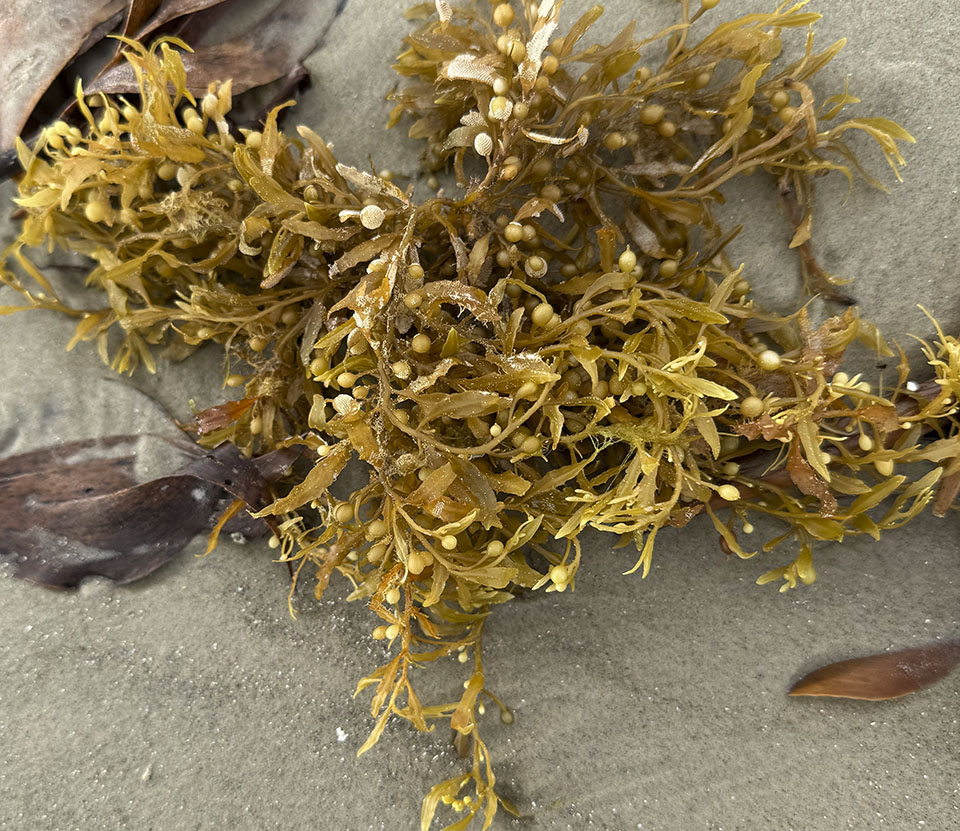
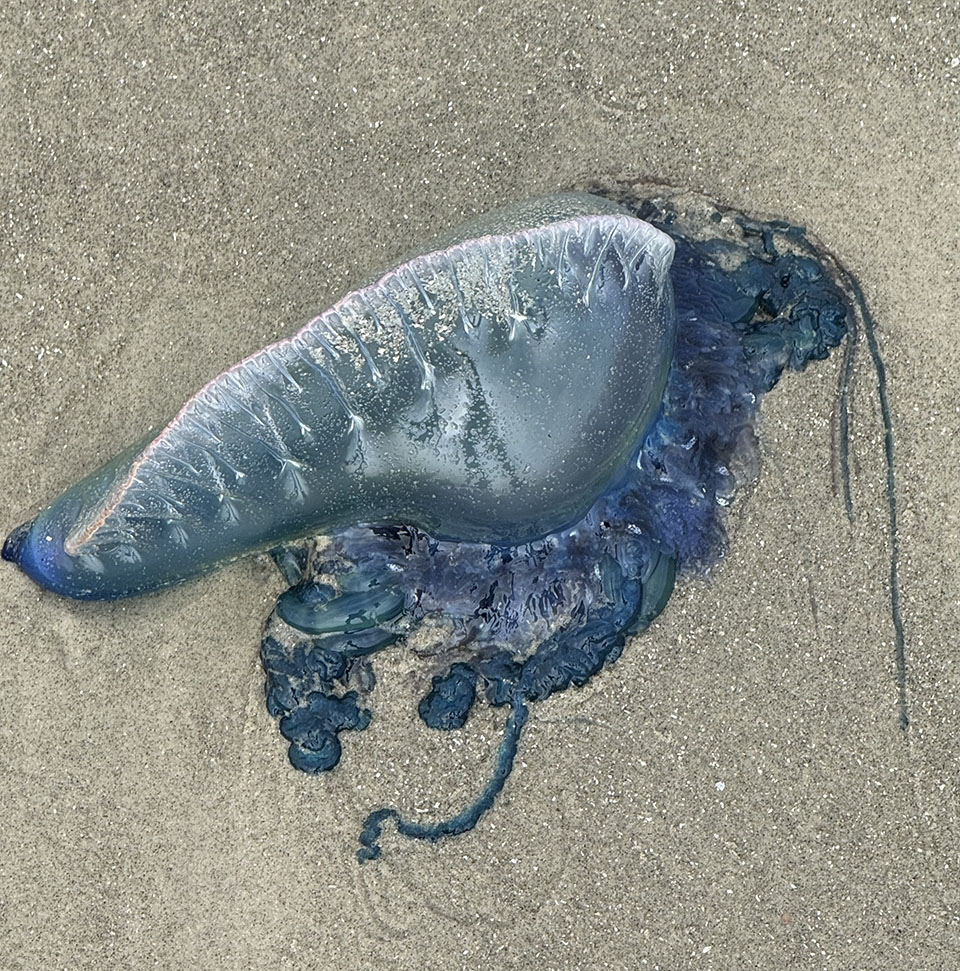
I spotted a fair amount of Sargassum seaweed (see photo), but not what I would call a deluge. And I also spotted a number of Portuguese man o’ war cast ashore (see photo).
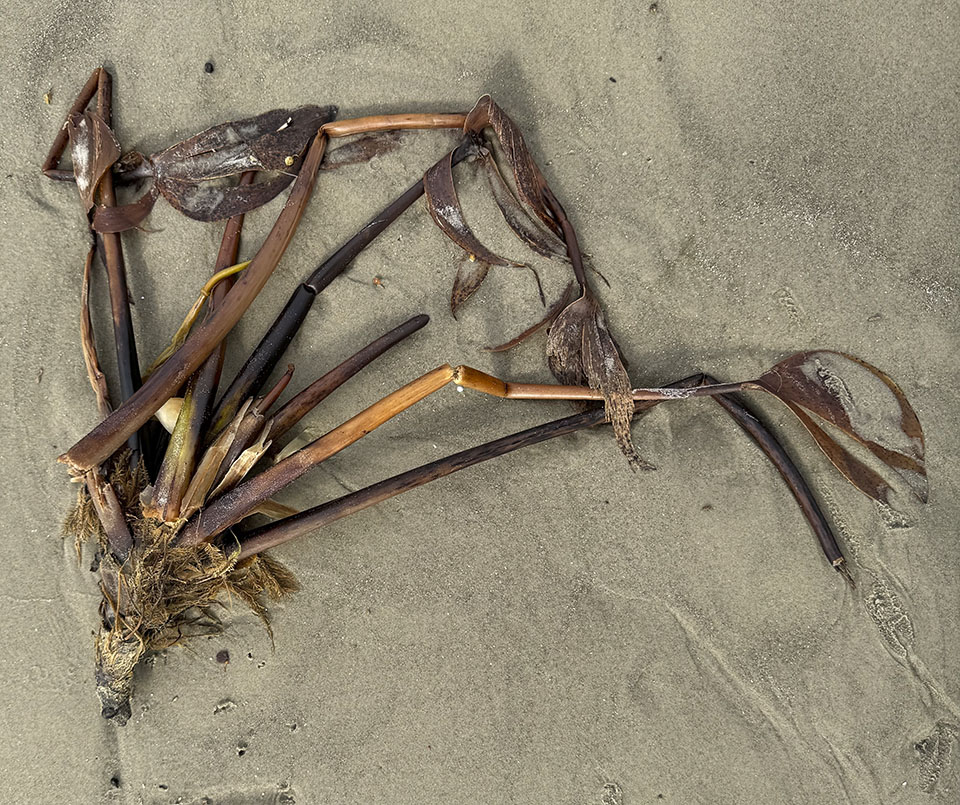
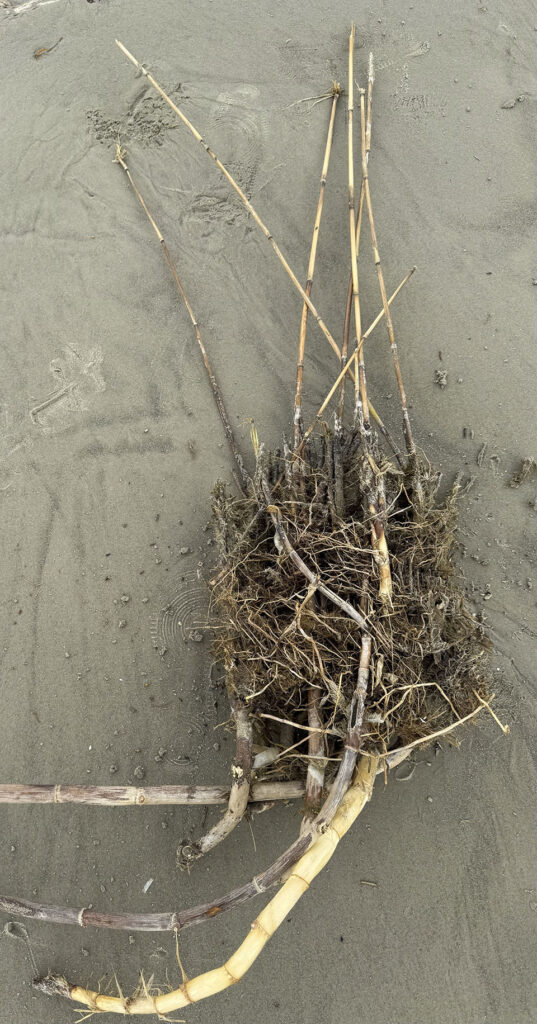
But oddly, these two common Gulf coast residents weren’t the major items cast ashore. As I walked, I saw more dead plants: water hyacinth (see photo) and common reed (see photo).
These two plants are not ocean residents, so how did they get here on the beach? Well, both plants live and grow in freshwater areas in the upper reaches of Galveston Bay. Water hyacinth floats on the water’s surface, while common reed grows rooted in mud along river and stream banks.
So, how do these two plants that grow in the bay’s upper end find their way onto the beach. Well, freshwater runoff from heavy rainfall can pick up and carry both plants seaward, where they end up dying and being cast ashore on the beach.
So, the next time you walk the beach, don’t assume that every item you see cast ashore has its origins in the sea. In fact, at times, much of what you see doesn’t come from the sea at all, but from somewhere inland from the coast.
Steve Alexander
Steve Alexander teaches wetlands management at Texas A&M University at Galveston and is a former member of the Board of Directors of the Galveston Island Nature Tourism Council. He is the author of Exploring Galveston: A Naturalist’s Guide to the Island.